
Good interview preparation starts well before the day itself - the more you understand about the role and the company, the more confident you'll feel walking in. Follow this guide from research through to your follow-up email, and you'll walk into your next interview genuinely prepared rather than just hoping for the best.
Before the Interview
Research the company's products, services, and any recent news thoroughly. You'll then answer "What do you know about us?" with real confidence instead of a vague, generic response.
Re-read the job description line by line and match your own experience to each specific requirement listed. Prepare a concrete example for every key requirement, so you're never caught without a real answer.
Plan your outfit and your route the night before, not the morning of. Nothing should catch you off guard on the actual day, from traffic to a missing button.
Prepare two or three thoughtful questions to ask your interviewer in advance. This shows genuine engagement, and it also gives you real information to help you decide whether the role is right for you.
Common Interview Questions
| Question | What They're Really Asking |
|---|---|
| Tell me about yourself | Can you summarise your background clearly and relevantly? |
| Why do you want this job? | Have you done your research, and are you genuinely interested? |
| What are your strengths? | Do you understand what this role actually needs? |
| What are your weaknesses? | Are you self-aware and willing to improve? |
| Describe a time you faced a challenge | How do you actually behave under real pressure? |
| Do you have any questions for us? | Are you genuinely engaged in the opportunity? |
Prepare short, honest answers to each of these in advance, rather than memorising a script word for word - a rehearsed-sounding answer often comes across worse than a genuine, slightly imperfect one.
Structure any example-based answer around a clear situation, the action you personally took, and the actual result. This keeps your answer focused and easy for an interviewer to follow, rather than a rambling story without a clear point.
During the Interview
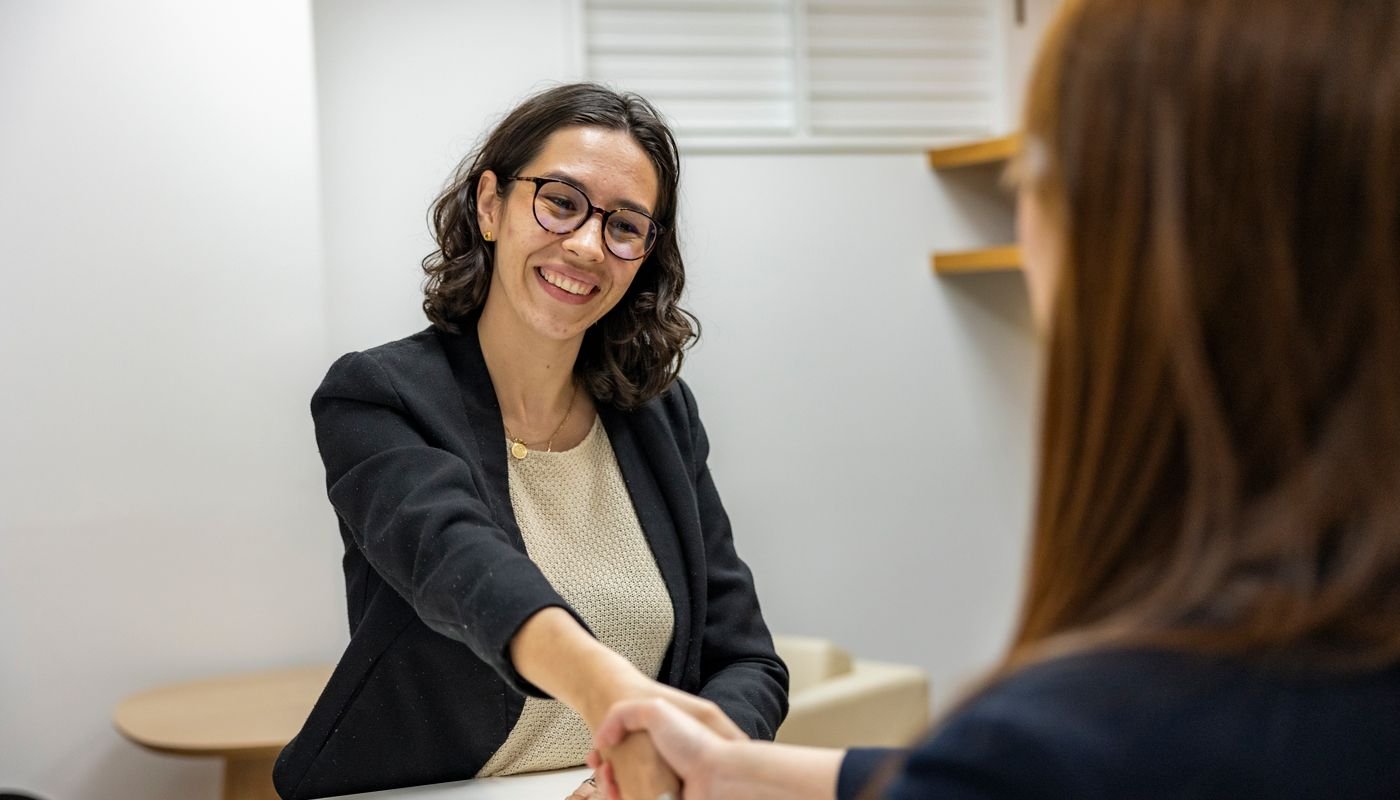
Arrive 10 to 15 minutes early, no more and no less. Greet your interviewer with a firm handshake and clear eye contact, since first impressions genuinely form within the first few moments.
Listen carefully to each question before you answer it. Ask for clarification if you're unsure what's actually being asked, rather than guessing and answering the wrong question confidently.
Sit with open, confident body language throughout - uncrossed arms, a straight posture, and steady eye contact all signal engagement even when you're nervous inside.
Pause briefly before answering a difficult question, rather than filling the silence immediately. A short, thoughtful pause reads as confidence, not hesitation.
After the Interview
Send a short thank-you email within 24 hours of your interview. Many candidates skip this simple step entirely, so doing it can genuinely help you stand out from the rest of the shortlist.
Mention one specific detail from your conversation in that email, rather than a generic thank-you. This reinforces your interest and helps the interviewer remember exactly who you are among several candidates.
Follow up politely if you don't hear back within the timeframe you were given during the interview. A brief, professional check-in is appropriate and shows continued interest without becoming pushy.
Interview Day Checklist
- Researched the company and the role
- Prepared answers to common questions
- Planned your outfit and travel route in advance
- Brought a printed copy of your CV
- Prepared two or three questions to ask the interviewer
- Arrived 10-15 minutes early
- Sent a thank-you email afterward, mentioning a specific detail
Frequently Asked Questions
What should I wear to a job interview?
Dress slightly more formally than the company's everyday dress code, unless you've been told otherwise.
How early should I arrive?
Aim to arrive 10 to 15 minutes before your scheduled time - not much earlier, and never late.
What if I don't know the answer to a question?
It's better to admit you're unsure than to guess confidently and get it wrong. Interviewers respect honesty over a confident-sounding wrong answer.
Should I ask questions during the interview?
Yes. Prepare two or three questions in advance to show genuine interest and to gather information that helps you evaluate the role too.
Is it necessary to send a thank-you email?
It's not required, but it's a simple, low-effort way to stand out from other candidates who skip it.
What if the interview is online instead of in person?
Test your internet connection and camera beforehand, and choose a quiet, well-lit space free of distractions.
How do I calm my nerves before an interview?
Practising your answers out loud beforehand builds confidence and reduces anxiety more than silently rehearsing them in your head.
What should I bring to an interview?
A printed copy of your CV, a pen and notepad, and any documents the employer specifically requested in advance.
How should I answer "tell me about yourself"?
Summarise your background clearly and relevantly to the role, rather than reciting your full life story - keep it to about a minute.